Paint Sculpt Print What You Want

 I was talking to a fellow artist last week about the in’s and out’s of being an artist and in that conversation I found myself saying quit profoundly:

“Just tell me what you want me to paint and I will paint it”

This was on the heels of a discussion about how the gallery system tries to manipulate the artist voice and steer the artist in one direction or the other to make them produce work that in invariably the same but sale-able.

It is kind of a double edge sword. On the one hand we want to sell our work so then why not produce what the market wants and your sales are hence forth guaranteed… aren’t they? The gallery said they would be. But on the other hand, hum… are you copping out?

We want to paint, sculpt, print what we want to paint, sculpt, print and the dam market is suppose to come breaking down our doors to get it.  But they don’t.  So you compromise and paint, sculpt, print what the market wants so that you can paint, sculpt, print what the hell you want and decorate your own walls and the walls of your family and friends (hey that’s their job, to support you with their walls).

So tell me what do you think about creating what the market wants so you can create what you want?

Preparing Installation Work for Exhibition

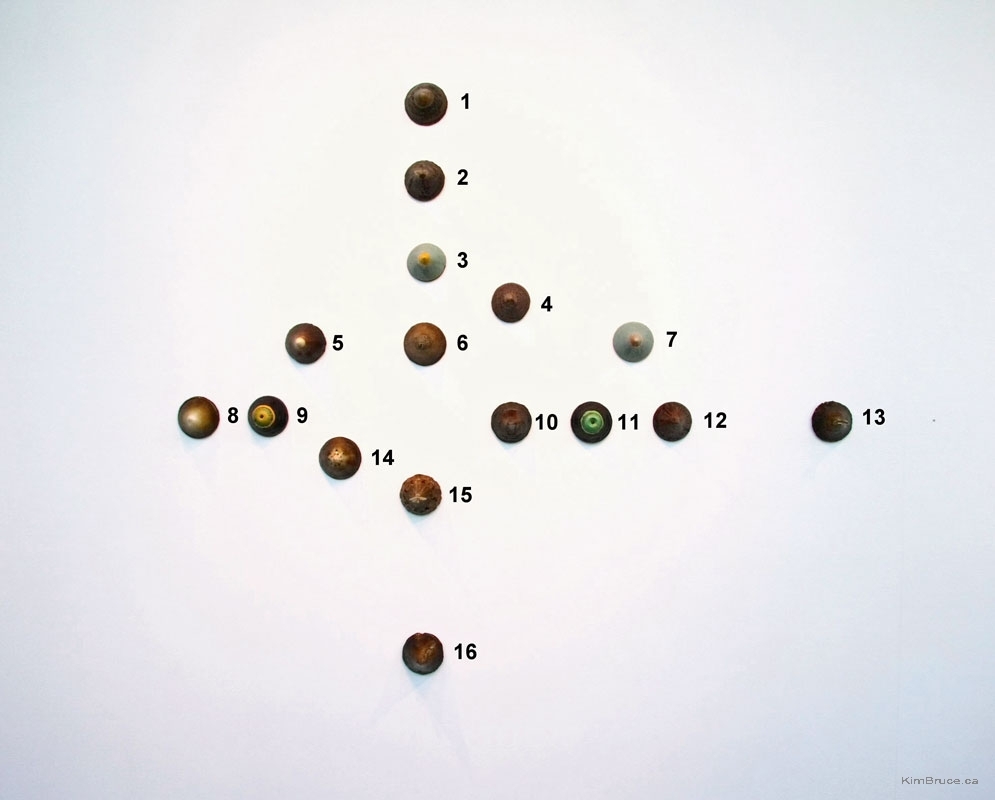
kim-bruce_curciform-map

no images were found

Weather it is a group or a solo exhibition if you are showing in a Public Art Gallery you have responsibilities. NEVER assume anything, always ask. There are a number of responsibilities you have as a exhibiting artist but in this post we’re going to talk about the installation of an installation work.

What you need to know:

Ask for a floor plan for the space?
If at all possible visit the gallery yourself to become familiar with the space and take your own measurements. If you can’t be there ask for a floor plan and pictures. You may need to make adjustments if for example the ceiling height is higher/lower or your allotted wall space is different than anticipated.

When are the installation dates?
If you can be there to install try to do it earlier rather than later. This will give you the time you need in case something unforeseen happens and save you from being there until midnight or finding yourself short of materials and all the stores are closed.

What technical support is available?
Again never assume that the gallery will know what to do with your work. More often than not artist run centers and galleries that are not the MoMA, have student installers who are there to learn and earn credits.

What equipment and tools are available for installation?
If your work has any special hanging requirements talk about it with your gallery contact. You might be required to supply the special installation items so give yourself plenty of time to source suppliers. Make sure you describe your work, how it was made and what attacheds it to the wall.

I always bring my tools with me because I know I’ll have the right size drill bit, etc. Also if you need electrical outlets ask about extension cord routes to your installation, you might have to supply your own extension cords.

Do a dry run: install your work in your studio.
Chances are you have done this to create the work in the first place, but if you are grouping pieces to create an installation work like I have done with the piece Cruciform, then don’t think that you can figure it out on site. A dry run will help you work the bugs out of the installation process and it confirms your dimensions.

Map it: do a drawing indicating dimensions and a starting point for the install. It will also make the real install go so much quicker and smoother.

If the show is out-of-town give the gallery installation instructions and drawings with dimensions. Photograph the work from various angles already installed and send them with the instructions.

If there is a catalogue being published for the exhibit, ask what type and how extensive a publication it will be. Often artists with installation work will not have a professional print ready image of the piece being shown. Don’t count on getting those images from the gallery when they document the exhibition as this may be too late to be included in the catalogue.

At the end of the exhibit
Find out when the work will be coming down and try to be there to disassemble the work. Sometimes the work doesn’t come down the same way it went up so make sure that uninstall instructions are also included with the work when sending out-of-town.

Always be ready and you will have the best show ever.

Damaged Work

bruce-kim-damaged

I posed the question for Alyson Stanfield to use at artbizblog.com:
Have you ever shown at a venue that broke or damaged one of your artworks and didn’t offer to remunerate you for the loss? What did you do?

The response was over whelming, 19 38 comments. Admittedly a few of those comments were me connecting with an artist who owned a piece of mine. Very cool this small world of ours. Still the stories ranged from work lost in fires, stolen and or mishandled and it all seems to come down to contracts and insurance.

My piece Ink Well was damaged by a gallery during installation. It was an accident and yes I had a contract with the gallery and they did have insurance on the work while it was in their possession.

What did I do? I took it on the chin.

Why?

  1. It was a public not for profit gallery.
  2. There were extenuating circumstances with the people involved that I think are to personal to publish here.
  3. I was able to piece the work back together (sort of).

While the damage to this piece brought a tear to my eye I was able to make something of it. The gallery gathered up all the fragments and most of the breaks from falling off the wall to a concrete floor below were clean.  But because this work is encaustic I could not just glue it back together.

Hesitantly I applied melted wax as slip and used my torch to fuse. I had to pass the torch over the surface to create a good bond and remove the crack lines. This process moved the current layers of wax and the colours thus creating a whole new piece.

While I still prefer the original piece I am happy that I was able to maintain the focal point at the center of the piece which was my favourite aspect of the original.

no images were found


Ink Well Before

no images were found


Ink Well After

Which one do you prefer?


Pulse Alberta Society of Artists

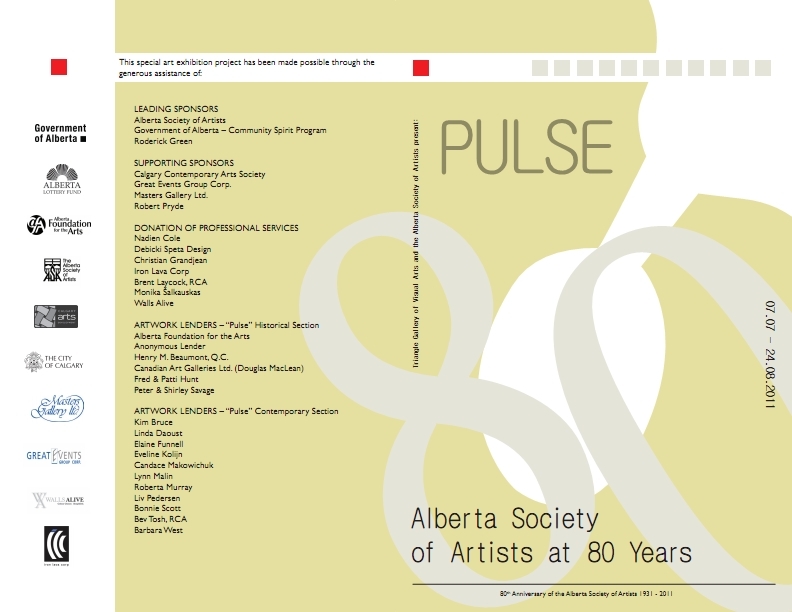
Pulse Invitation
Kim Bruce - Which Way
Which Way, 2011, Encaustic, 8 x 42 x 2 in

The contemporary Pulse of the Alberta Society of Artists is highlighted in this curated major exhibition of current ASA members working in non-traditional and unconventional modes. I am proud to announce that 4 pieces from the Off the Wall series will be part of this exhibition.

Rounding out this 80th anniversary celebration is a small selection of early members who fostered the Alberta art scene. A multi-faceted picture has been provided by curator Mary-Beth Laviolette.

The exhibition will be presented at the Triangle Gallery of Visual Arts.

Opening Reception: July 7, 2011 at 7:30pm;

Show Dates: July 7 to August 25, 2011

Triangle Gallery of Visual Arts
104 – 800 – Macleod Trail SE
Main floor, Calgary Municipal Building
403-262-1737

Gallery hours are Tuesday – Friday 11am – 5pm and Saturday 12 – 4pm.


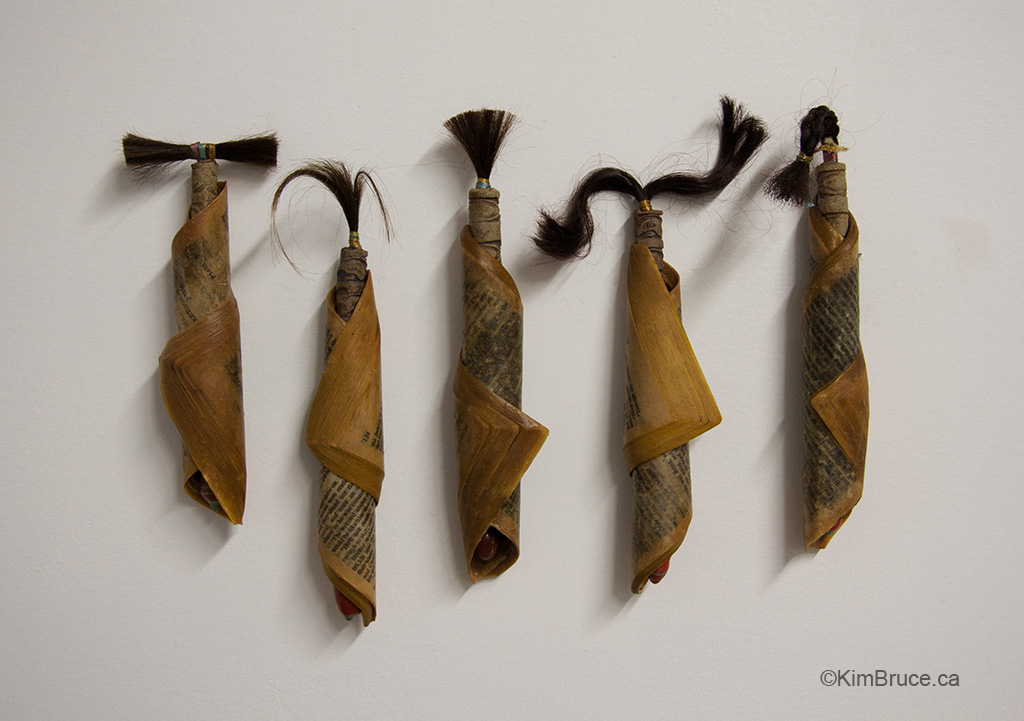
Working with Hair

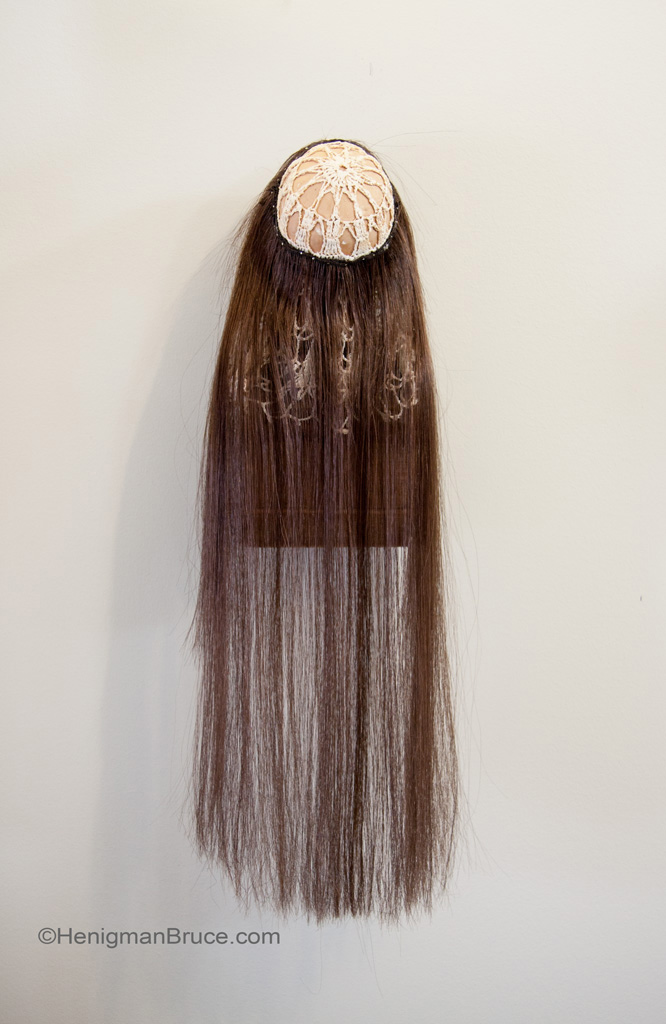
Henigman Bruce - woman's work detail

If you read my post about my work with Pins & Needles you will probably appreciate my work with hair.

I work with fine false wig hair as opposed to actual human hair for a couple of reasons. First I think that human hair should be donated to create wigs for people who have lost theirs due to cancer treatments. And secondly people are relieved when I tell them that it is false hair and not the real thing.

Our societies views on hair when not actually attached to our heads is one of disgust? Gross? I’m not sure when the change of view happen. It used to be in Victorian times a more precious thing.  A lock of your loves hair was special and there were many fine objects created from hair; weaved into brooches and lockets and the like.

In my work with hair I juxtapose elements to create conceptual statements regarding vanity, fashion, feminism and religion. You can find some pins & needles in the 3 Hail Mary’s.

Shipping Art

IMG_5932Shipping art to the U.S. and getting it back again. It’s the getting it back that’s the tough part. I had 5 pieces in an exhibition in New York a few years ago. After the show was over and the gallery shipped it back, the work was stopped at the border. Customs would not release it until I paid a brokerage fee. I called Canada Customs and explained that I owned the work but it seems that they don’t have a way to handle this. There was a value placed on the work so there was duty. In the end I was told that the only way to avoid duty is to broker it yourself.

Now saying all that…

When I shipped the work to New York I used an art shipper. Actually 2 art shippers; one from Calgary to Toronto, then handed off from Toronto to New York. They took care of everything and all the costs were quoted up front. It was expensive (close to $900 for 5 pc’s) but it arrived all very safe and sound.

I believe the trouble I had on the return delivery was because the gallery tiring to save money shipped my work FedEx Ground! Why is still beyond me, this was a very reputable gallery who ships work back and forth all across America but not that often across the border. Had they used an bonafide art shipper I don’t believe I would of had the problems I had.

Did I mention that all the work can back DAMAGED! They even managed to break a wood crate. That’s because they shipped via ground and my work was bounced all around the U.S. before it even managed to reach the border. You can imagine how my heart sank when the work finally arrived 2 weeks later.


I hear a lot of horror stories about damaged art and all the artist can do is throw their hands in the air in defeat. I thought that I was going to be one of those but the gallery owner really came through for me. He fought tooth and nail with FedEx and managed to get me a settlement. They also sent me the encaustic that I would need to repair the work, which I was able to do.

The typical scenario is that the artist pays to have the work shipped there and the gallery is responsible to incur the cost of the return. Perhaps it would be prudent to discuss the shipping methods up front before entering into a contract.

Here’s a list of some art shippers at artbiz.ca

Brushes

In 2007 I started working with brushes; hair brushes.  The concept seems rather obvious – hair and brushes. I found some basic brushes at the drug store that I used originally and they had a flexible base that I could pull the hair through with a crochet hook. Tedious job that and a bit messy – hair every where.

But the work always nagged me for a better brush. This year I revisited this work because a friend of mine donated 2 vintage brushes. It wasn’t as easy this time to pull the hair through as the bases were solid. I had to drill the holes straight through to the back and make sure everything was really tight in order to fit it all back together.

I had actually thought that this concept was done on the first go around. The idea was executed and my creativity satisfied for the most part, except for the nag about the quality of the brush it self.  So a great big thank you to Bev Tosh for the brushes; it was well worth the work.


Family of Four

About “Family of Four” (triptych)

Family of Four examines the visual blending of the family matriarch with the other family members. By overlaying images of husband, daughter and son with the mother one is not only able to see the physical resemblances but is able to feel the strength and influence of the strong personality of the matriarch.

The images are hand pulled on to translucent chiffon and layered with the matriarch set in an encaustic background and the top image set off approximately ½”. The layering adds a sense of depth and changes the image depending on the viewer’s vantage point, which also adds to physiological impact the matriarch may have had on the other family members.

Pins and Needles

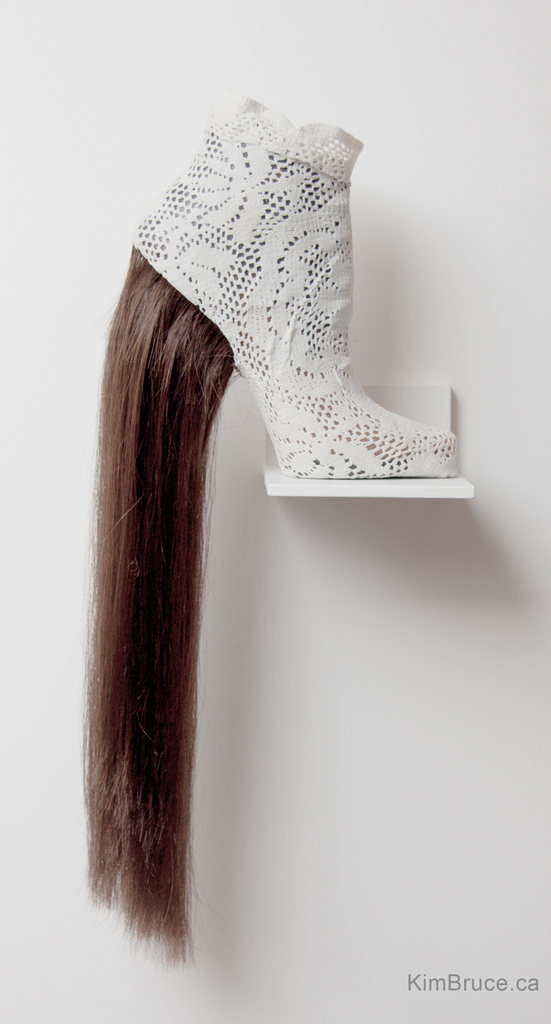
Kim Bruce - Well Heeled
Kim Bruce – Well Heeled

People are either totally fascinated or disturbed by my use of pins and needles in my work and very rarely immune . Since I prefer to work with opposites I find these opposing viewpoints are very apt. I believe my work gets its balance both visually and ethereally by using contrasting elements. When you think of a pin it’s a very feminine object, but it’s hard, straight and sharp. Yet, it’s used with fabrics which are soft, flexible and warm.

By far the piece that draws the most attention when it comes to my use of pins is “Pin Point”.  Pin Point is a cast beeswax figure draped in wax muslin, carved into and plied with hundreds of straight pins. I think Wes Fortune said it best in the review of “MiniArture”.

“The works of Calgary-based artist Kim Bruce illustrate this point in the most elegant fashion. The former interior designer now full time artist creates sculptures that provoke musings about her state of physical, emotional and spiritual well-being and ultimately, our own.”
Wes LaFortune, ffwd,
It’s a small world: Vol 9 No 10, Feb 12, 2004 (PDF)

Pin Point made it into the New York Times when they wrote an article on R & F Handmade (encasutic) Paints at the same time that I was included in a group exhibition at their gallery.

Pin Point will be exhibited in Toronto in the Sculptors Society of Canada’s show this August to Sept 2010.The other pin piece selected for the exhibit is “Pin Head ll” and a non-pin piece “Gangsta” from the All in My Head series. So if you are in Toronto I invite you to stop by.  Please see my “Exhibits” page for details.

Here are some other works with pins, needles and safety pins including Pin Head ll.